
Literature Explains People
Stories are one of the most powerful tools we have for understanding people.

Dr. Whitney Kosters
Professor • Creator • Educator
I use literature and writing to explore why people love, lie, judge, obey, resist, sacrifice, and search for meaning.
What Literature Helps Us See
People are hard to understand, including ourselves. We misread each other, justify bad choices, stay in situations that hurt us, and want things we cannot fully explain. Literature gives us a way to look at those patterns without avoiding them or reducing them to simple answers.
It also reminds us that we are not alone. Across time, place, and experience, stories connect us through the questions, fears, longings, and contradictions that make us human.
This is where my work begins. I help you see the underlying patterns inside the stories we read and the lives we experience.
Human Behavior
Why people love, lie, judge, obey, resist, sacrifice, and change.

Identity and Meaning
How stories help us understand who we are, what we value, and why we make meaning from experience.
Power and Persuasion
How language, authority, influence, and pressure shape what people believe and do.

Explore Literature, Teaching, and Critical Thinking

Whether through literature, teaching, or digital content, my work focuses on helping people think more clearly, communicate more effectively, and understand themselves and the world more deeply.
Featured by Arkansas Tech University Library
My literature and writing lectures are featured throughout Arkansas Tech University Library’s “English Professors Explain,” a curated collection of scholarly video resources selected to help students find academically sound literature and writing instruction.
Videos included in the guide are selected for their “academic value, clarity, relevance, and usefulness to students.”
New Classroom Posters!
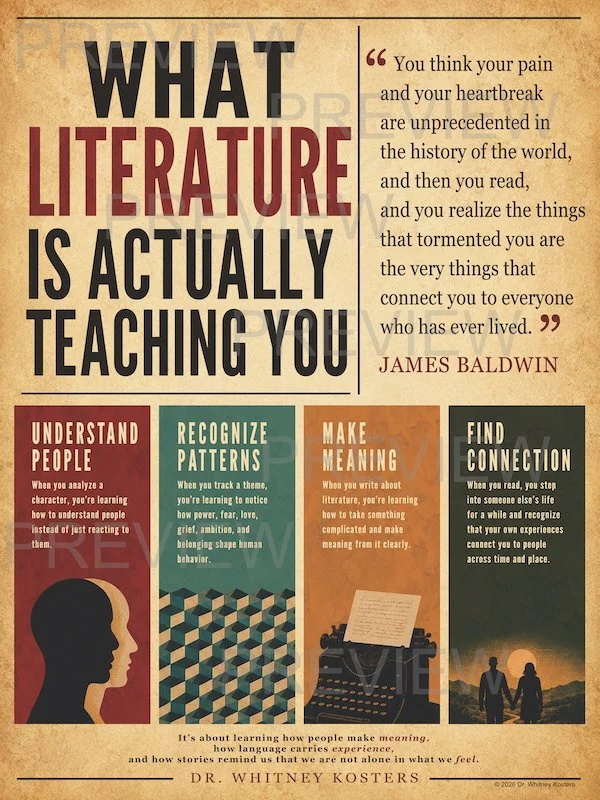
What Literature is Actually Teaching You
Literature does more than teach plot, symbolism, or literary devices. It helps us understand people, power, fear, desire, identity, and the choices human beings make.Inspired by my video on why literature matters, this printable classroom poster helps students remember the deeper purpose of reading.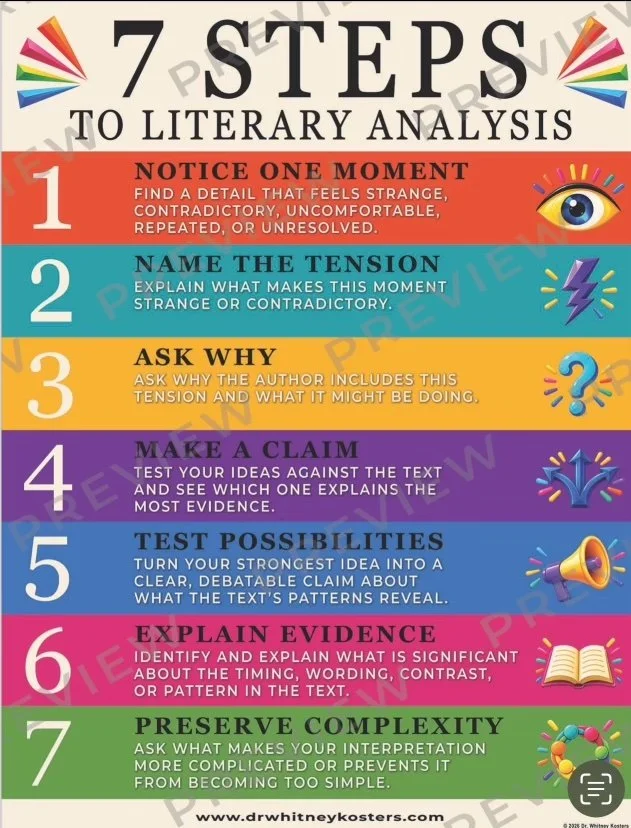
How to do Literary Analysis in 7 Steps
Literary analysis isn’t hunting for symbols or trying to guess what a teacher wants you to say. This framework shows students how to move from one observation in a text to a defensible interpretation and then build the reasoning and evidence that support it.
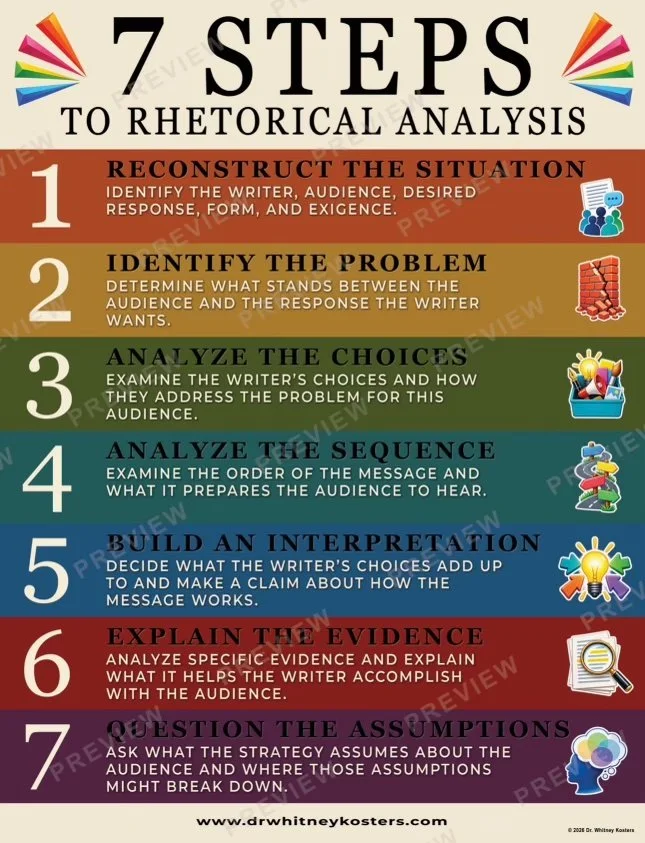
How to do Rhetorical Analysis in 7 Steps
Rhetorical analysis asks more than whether a writer uses ethos, pathos, logos, or another technique. This framework helps students reconstruct the rhetorical situation, identify the problem a speaker must overcome, and analyze why particular choices work for a specific audience.
Stay Connected
Get Updates
Join the list to receive occasional updates, free resources, and early access to selected videos and educational materials.
Work With Me
I collaborate with educators, brands, organizations, and media partners who care about literature, critical thinking, teaching, human behavior, and meaningful learning.
Potential collaborations include speaking, podcast or media appearances, curriculum projects, educational content partnerships, brand collaborations, and custom resources.
Use the form to share the opportunity, timeline, audience, and what kind of collaboration you have in mind. I’d love to hear more.